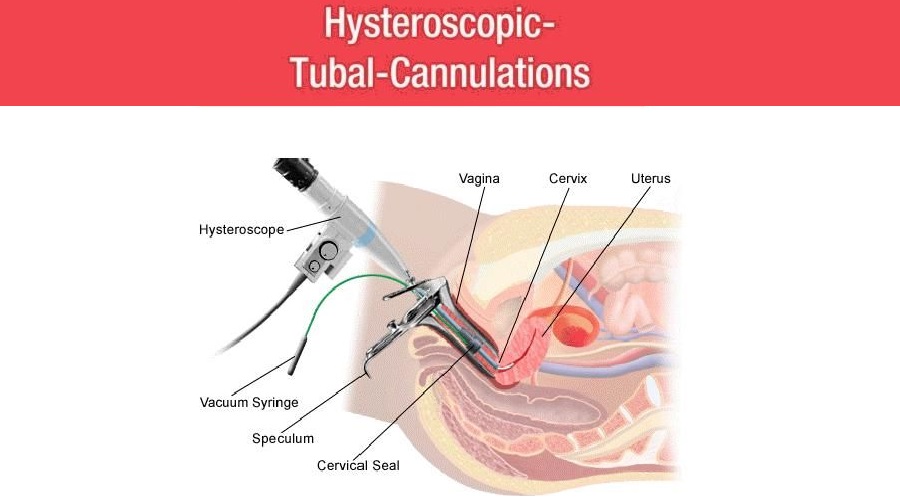
HYSTEROSCOPIC CANNULATION
If you have trouble getting pregnant and the doctor says it's because your fallopian tubes are blocked, a procedure called tubal cannulation may be for you. Unlike fallopian tube surgery, the doctor doesn't have to make any cuts in your body. You usually don't need to stay overnight in a hospital after the procedure.
What Happens During Tubal Cannulation :
The doctor inserts a tube through your vagina called a catheter, which is guided over a wire. Either ultrasound or real-time moving X-rays of the fallopian tubes may be used to help your doctor find the correct spot. He opens up the blocked area using a balloon on the catheter or with the wire.
doctor flushes dye through the catheter to identify and locate a fallopian tube blockage. You may or may not get anesthesia during the procedure. Your doctor might give you a mild sedative to help you relax.
Is Tubal Cannulation Right for Me?
You should get it done only if an imaging test clearly shows a blockage in one or both of your fallopian tubes. The procedure is most successful when the blockage is in the part of the tube closest to your womb.
If the imaging test shows a blockage, some doctors recommend that women consider tubal cannulation before having more expensive fertility procedures, such as in vitro fertilization (IVF).
Who Should Not Have Tubal Cannulation?
Tubal cannulation may not be recommended if you have:
- Extensive scarring in your fallopian tubes
- Genital tuberculosis and certain other infections
- Previous fallopian tube surgery
- Severe blockage that is difficult for a catheter to pass through
- Major damage to your fallopian tubes
- Distal blockage, which happens an area of your fallopian tube that's farthest from the uterus
The procedure may fail or may not work as well if you have:
- Blockages in the narrowest part of the fallopian tube, called the isthmus
- Inflamed fallopian tubes
- Severe tubal disease
What to Expect After Tubal Cannulation
For many women, the procedure makes it possible to get pregnant. Your chances of pregnancy depend on the:
- Specific procedure performed
- Location of the blockage
- Cause of the blockage
If tubal cannulation isn't right for you because you have severe fallopian tube disease, you may want to consider other treatments for infertility like IVF and embryo transfer.